


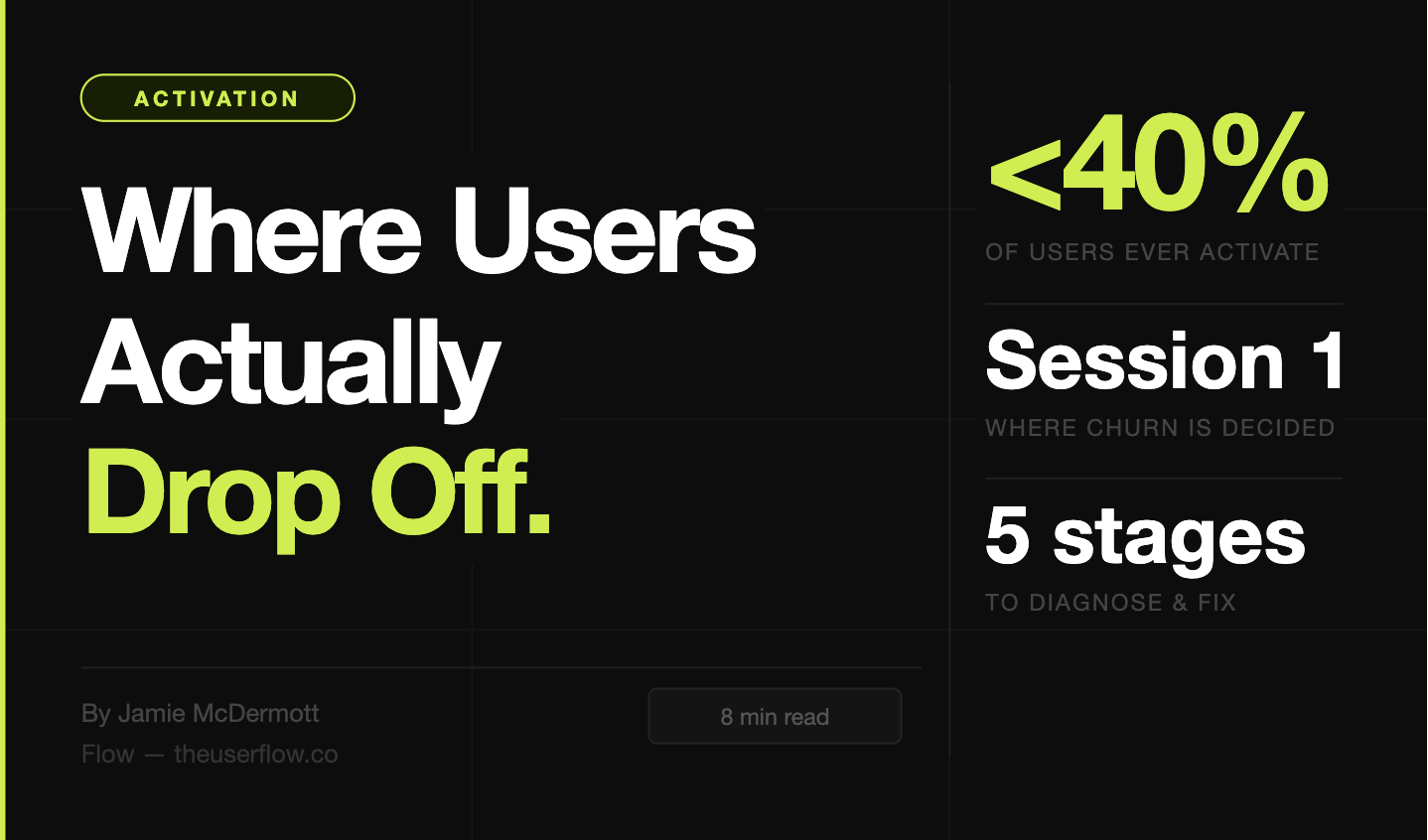


The average B2B SaaS product activates fewer than 4 in 10 users. Freemium products do worse, with activation rates sitting closer to 20%. And yet, when you ask most founders where their biggest drop-off happens, they point to the wrong stage almost every time.
This post is about the gap between where teams *think* users lose momentum and where they actually do. It covers the five stages I audit in every Activation Diagnosis, the bottlenecks that keep showing up at each one, and what to do when you find them.
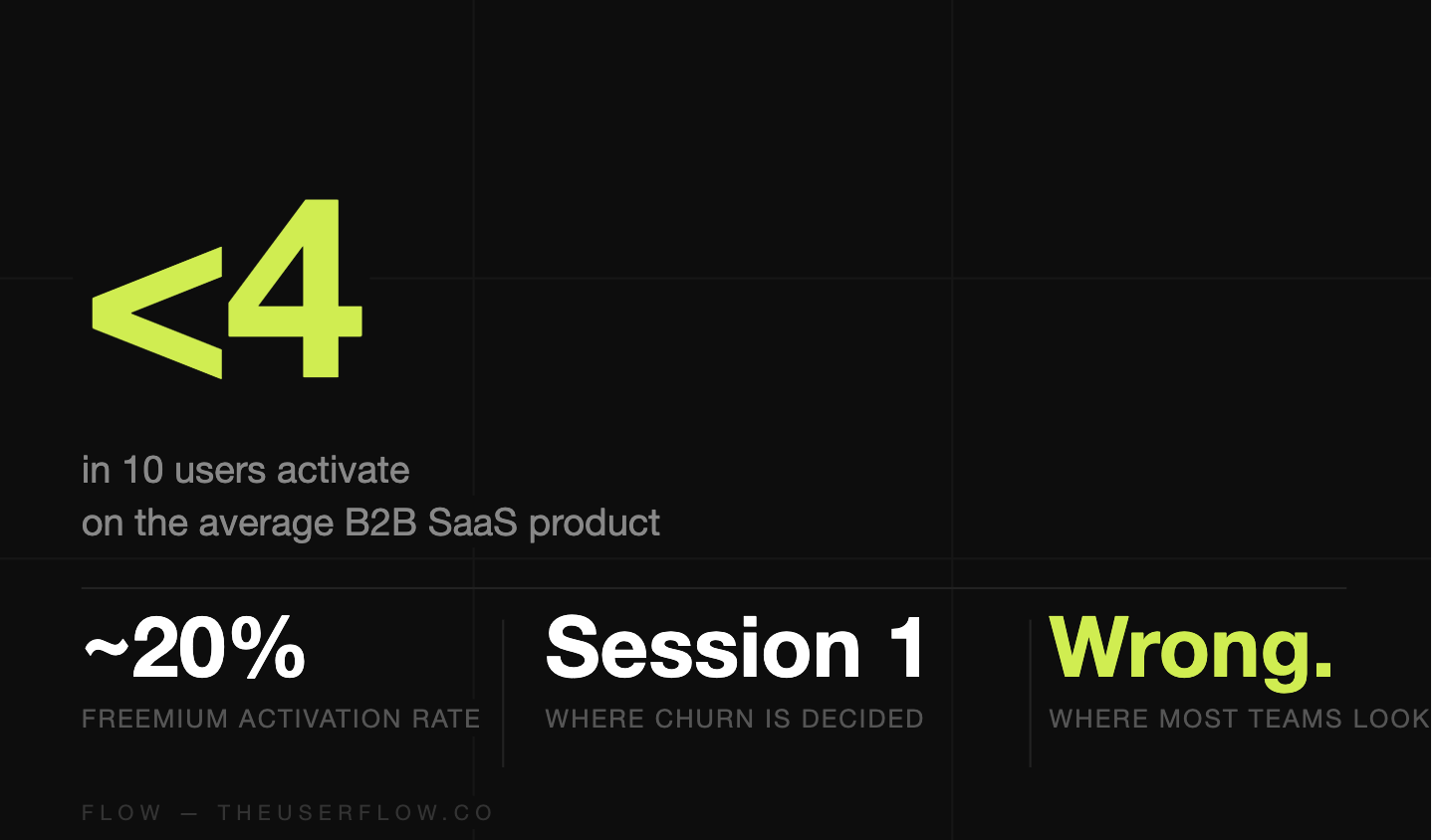
The most common thing I hear in activation conversations is some version of: "We think users are dropping off after the trial ends." But when we actually map the signup-to-value journey, the drop-off is usually happening much earlier — sometimes before a user has even seen the core product.
There are a few reasons founders get this wrong.

First, they're measuring what's easy to measure. Trial expiry dates are easy to pull. The moment a user silently gives up at step three of setup is harder to see if your event tracking isn't clean.
Second, there's an attribution mismatch. When someone churns at month two, the team blames month two. But in most cases, the user never actually activated. They converted on billing, not on value.
One company I spoke with recently was adding 70 to 80 users a month and losing 35 or more of them each month. Their read was that users were churning due to dissatisfaction. The real story: a significant portion of those users had never launched a single campaign. They'd paid, bounced off a confusing setup flow, and left without ever reaching the product's core value. That's not churn. That's a failed activation masquerading as churn.
---
When I run a 45-minute Activation Diagnosis, I'm working through five areas in sequence. Each one is a potential bottleneck.
This is where the friction starts for most products and where teams underestimate the cost of complexity.
The data is fairly clear: reducing a signup form to 3 to 4 essential fields and creating one clear onboarding path to a first meaningful action can improve conversion by 5 to 10% on its own. But the more common problem isn't form length. It's the presence of steps that feel like admin rather than progress.
One technical platform I looked at had multi-factor authentication as a required step before users could see any product at all. A meaningful percentage of users never made it past it. The team knew it was there. They'd just never quantified the exit rate at that exact point.
What does a brand-new user see when they land in the product for the first time? This is where "fear of a white canvas" kills more trials than most teams realise.
The trigger here is usually an overwhelming dashboard: too many features, no clear starting point, no indication of what to do first. The user opens the product, feels lost, and closes the tab. They may come back once more, feel the same way, and then go quiet.
I've seen this pattern across products in very different categories. A SaaS tool built for agencies described it well: "We regularly get feedback that the system is overwhelming. People leave saying they want more features, but the features were already there. They just couldn't find them."
Complexity that isn't sequenced is indistinguishable from a bad product.

This is the stage where the aha moment lives, and it's almost always further from the front door than the team estimates.
Top-performing products get users to a first meaningful action in under 24 hours. Not a full tutorial. Not a feature tour. A completed task that demonstrates the product's core promise.
For a LinkedIn outreach tool, the aha moment is receiving a first response. For a form-building platform, it's sharing a completed form and seeing a submission come in. The trap many teams fall into is designing onboarding around the *product's* capabilities rather than the *user's* goal.
The fix is almost always the same: identify the one action that predicts long-term retention, and redesign the first session around reaching that action as fast as possible.
Between signup and first value, most products have a setup layer: connecting integrations, filling in profile information, configuring preferences. This is where onboarding gets stalled, and where the backlog problem lives.
One company I spoke with had their onboarding backed up to early March. They'd tried to hire to solve it and couldn't. The underlying issue was that users needed a live touchpoint to get through setup, which meant every new user required a human in the loop. That's not a hiring problem. That's an onboarding architecture problem.
The question to ask here is: which setup steps are genuinely necessary before a user can experience value, and which ones could come later?
The last stage is whether a user who has reached first value actually comes back. Activation isn't a one-time event. It's a pattern of behaviour.
What I'm looking at here is the gap between users who activate once and users who build a habit. The signals are usually in the data: drop-off at day 3, day 7, or day 14 after first use. Each inflection point has a different cause.
A team transitioning to a product-led model described it well: the goal isn't just for users to see what the product means, it's for them to understand that value in a way that makes them come back without prompting.
---
Across every activation conversation I've had, the bottleneck is almost never where leadership expects it to be. And the fix is almost never a new feature.
The pattern that comes up most often is this: the product works, the data exists, but nobody has mapped the full signup-to-value journey in one place. Teams are optimising individual pieces, in isolation, without a clear picture of where users are actually losing momentum.
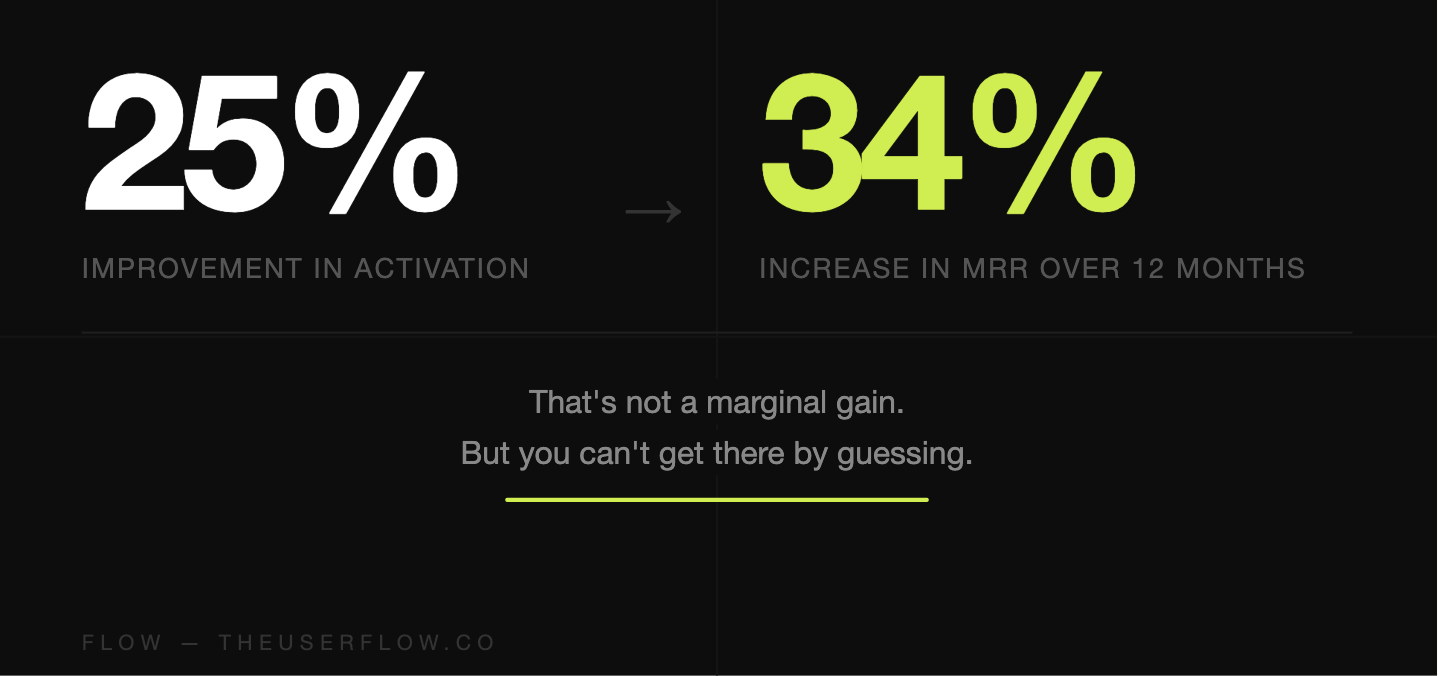
A 25% improvement in activation has been shown to drive a 34% increase in MRR over 12 months. That's not a marginal gain. But you can't get there by guessing.
---
- Activation drop-off almost always happens earlier than founders think
- Measuring what's easy (trial expiry, churn date) masks the real problem
- The five stages to audit: signup flow, first session experience, time to first value, setup gaps, and early engagement
- Complexity that isn't sequenced looks like a bad product to users
- The goal is one clear path to a first meaningful action, not a full feature tour
---
If you're a founder or product lead at a B2B SaaS company and you've been circling this problem without a clear diagnosis, I'm running a small number of free 45-minute Activation Diagnoses over the next few weeks.
We walk your signup-to-value flow, identify exactly where momentum stalls, and you leave with a prioritised list of what's actually blocking your activation rate.

DM me on LinkedIn if you'd like one of the slots.


