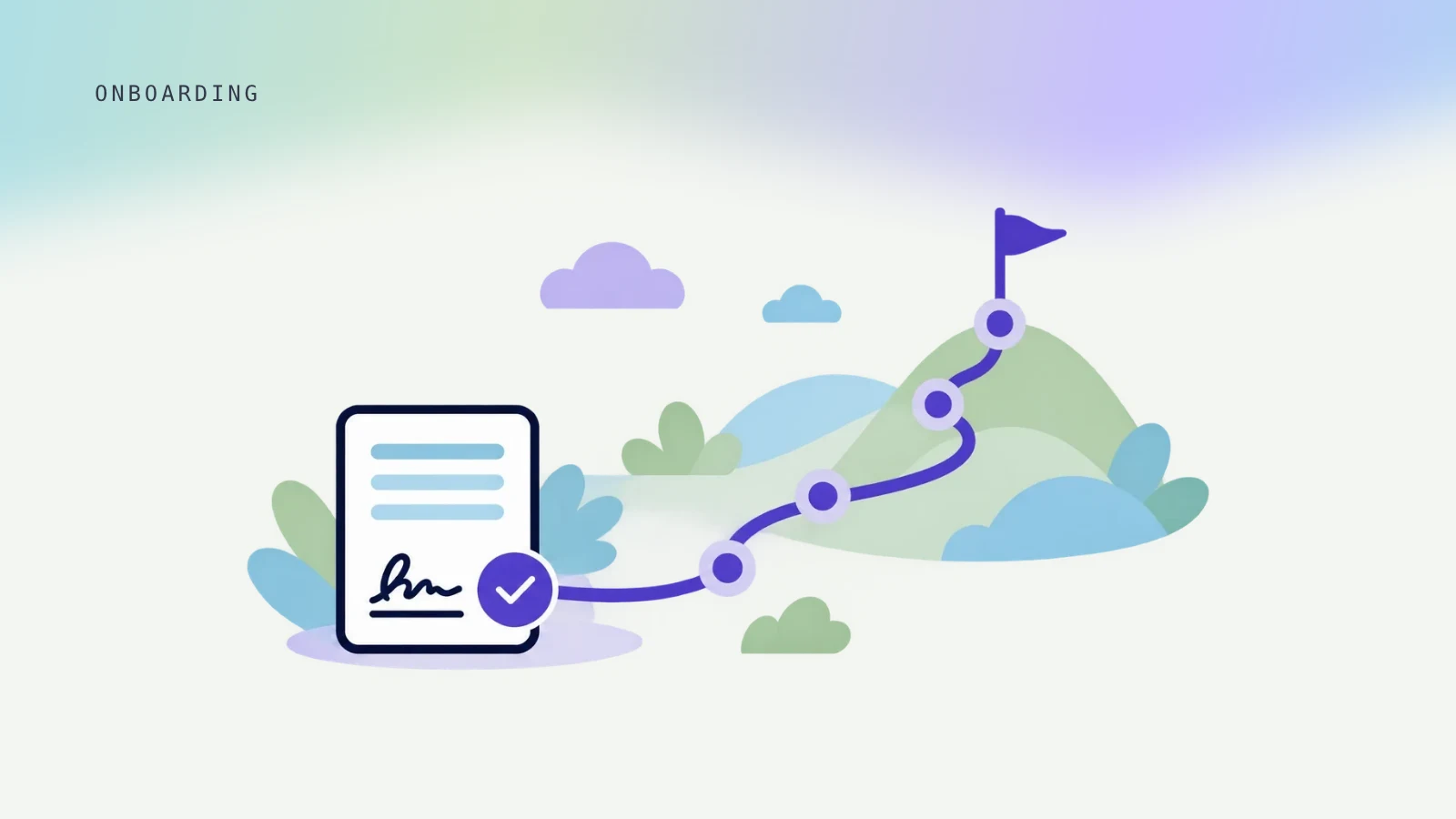
SaaS customer onboarding is everything between a signed deal (or a first payment) and the moment the customer gets the outcome they bought. It covers the whole account, not just one user: the buyer, the admin who sets it up and the people who'll use it every day. Done well, it follows six steps: handoff, kickoff, setup, training, first outcome and review. One person owns the date the customer gets there.
What is customer onboarding in SaaS?
Customer onboarding is the process of getting a new customer account to the result it paid for: data connected, the team using the product and a first outcome they can point to. It starts when the deal is signed or the first invoice is paid, and it ends when the customer gets that result on their own.
It's related to user onboarding, but it isn't the same thing. User onboarding gets one person from signup to first value inside the product. Customer onboarding gets an account there, across everyone involved on both sides. We explain the difference in more detail in user onboarding vs customer onboarding, and cover the user side in our user onboarding guide. For the wider picture, see what SaaS onboarding is.
Why does customer onboarding matter?
Because that's where early churn comes from. Focus Digital (2025) found that 43% of SMB customer losses happen in the first 90 days. A customer who never reaches the outcome they bought has no reason to renew, however good the product is. Our guide to how to reduce SaaS churn covers what to do about it.
It also sets up growth. Customers who get to value early are the ones who add seats and upgrade. Median net revenue retention for B2B SaaS was 101% in 2025 (SaaS Capital), so for most companies, expansion barely covers what's lost to cancellations and downgrades. Better onboarding moves both sides of that number.
The customer onboarding process in six steps
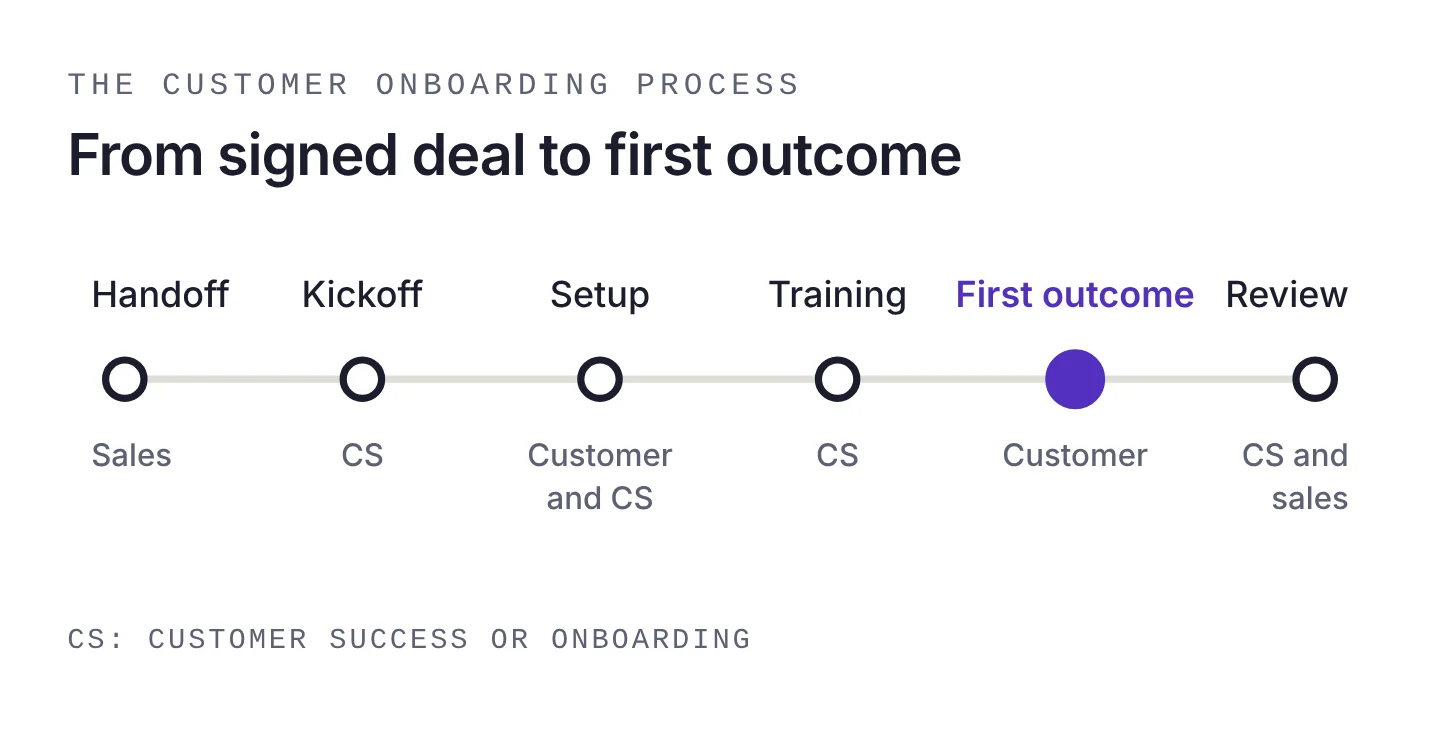
1. Hand off from sales with the promise in writing
The most common way customer onboarding goes wrong is that the customer has to explain everything again. Before the kickoff, sales should pass on, in writing:
- What the customer is trying to achieve, in their words.
- What was promised: features, dates, integrations and anything unusual.
- Who's involved on their side, and who signed.
- How they'll judge success in 90 days.
If the kickoff turns into a second discovery call, the handoff failed.
2. Kick off with the outcome and the date
Meet within a few days of the deal, while the decision is fresh. Agree three things: the first outcome the customer wants, the date they want it by and who does what on each side to get there. Set expectations plainly: what your team will do, what the customer needs to do and where to go for help. Write it down and share it.
3. Set up the account
Connect data, set up integrations and invite users. Many onboardings stall here, waiting on someone at the customer who has other priorities. Make each setup task small, give it an owner and a date, and check in when one slips. For self-serve accounts, this is the step where in-app guidance and setup emails matter most.
4. Train by role
Admins, managers and everyday users need different things. Train each group on the few tasks that get them to the outcome, not on every feature. Short sessions, recorded, with help articles to go back to, work better than one long demo.
5. Reach the first outcome
The first outcome is the result the customer bought, in a form they can see: a first report on their own data, a first campaign sent, a first invoice processed. Name it at the kickoff and make it the onboarding's finish line. When they get there, tell them, and tell whoever signed.
6. Review and set the next goal
Around 30 to 90 days in, meet to review: did they get what they bought, who's using the product and who isn't, and what comes next. This is where the account lead or sales joins again, because the next goal is often a reason to expand.
Who needs to be involved?
On your side:
- Sales: writes the handoff and joins the review.
- Customer success or onboarding: owns the account and the date, from the kickoff to the first outcome.
- Product: hears what blocks setup and fixes the causes, so the next customer doesn't hit them.
- Support: answers the questions that come up along the way.
On the customer's side, find out who the buyer is, who will set it up, who will use it daily and who will judge whether it worked. Accounts that depend on one champion are fragile. If that person leaves, the account can go with them.
To improve the process itself, ask each internal team the same four questions:
- What do new customers struggle with most during onboarding?
- Which parts of onboarding do they find most useful?
- Which steps or features are most often misunderstood?
- What do customers say in their first month that should have been said before they signed?
How does customer onboarding differ for self-serve, sales-led and hybrid products?
Self-serve. There's no kickoff call, so the product and your emails do the work. The six steps still apply, but they happen in the app: the "handoff" is what you learned at signup, setup is guided in-product, and the first outcome is the moment you design everything around.
Sales-led. Every account gets a named owner, a kickoff and a plan with dates. The risk is the handoff: what sales learned has to reach the person onboarding the customer.
Hybrid. Most accounts onboard themselves, while larger or higher-value accounts get a person. Decide which accounts get a human by size or plan, not by who shouts loudest, and make sure self-serve accounts that grow get noticed.
How do you measure customer onboarding?
| Number | What it tells you |
|---|---|
| Time to first outcome | How long accounts take to get what they bought |
| Share of accounts that reach the first outcome | How many get there at all |
| Users active per account | Whether the product spread beyond the champion |
| Accounts lost in the first 90 days | Whether onboarding is leaking customers |
| Expansion in the first year | Whether onboarding set up growth |
Track them by month of signing, so you can see whether a change to the process made a difference.
Common customer onboarding mistakes
Customer onboarding checklist
- Handoff written by sales: goals, promises, people and the 90-day measure of success.
- Kickoff booked within days of the deal.
- First outcome and its date agreed and shared.
- Every setup task with an owner and a date.
- Training planned by role, recorded.
- First outcome reached and announced to the buyer.
- Review at 30 to 90 days, with the next goal.
Should you hire a customer onboarding agency?
Bring in help when onboarding is clearly costing you customers and no one on your team has the time to fix it. That usually shows up as accounts that never get past setup, early cancellations nobody saw coming, or trial users who never become paying customers.
What you should expect from an onboarding agency: a diagnosis from your own data before anything is built, a fix built in the tools you already use and a number agreed in advance to judge it by.
That's how we work at Flow. Our 48-hour diagnostic finds where customers stall between signup and renewal, and our Onboarding Sprint builds the fix in 14 business days. For TimelinesAI, onboarding emails aimed at one setup step took the share of Zapier trial users who connected WhatsApp from 47% to 55% in 12 weeks. If you'd like to talk it through, book a 20-minute call with Jamie.
Questions
What is the difference between customer onboarding and user onboarding?
User onboarding gets one person from signup to first value inside the product. Customer onboarding gets a whole account, the company that paid, from the signed deal to the outcome it bought, across every person involved on both sides.
How long should SaaS customer onboarding take?
As long as it takes the customer to reach the first outcome they bought, and no longer. Agree that date at the kickoff and work back from it. A self-serve account might get there in a day; a large account with integrations can take weeks.
Who owns customer onboarding?
One named person per account, usually in customer success or a dedicated onboarding role, from the handoff until the first outcome. Sales, product and support all contribute, but one person is accountable for the date.
What are the steps of customer onboarding?
Six, for most SaaS products. The handoff from sales, the kickoff, setup, training by role, the first outcome and a review that sets the next goals.